Connecting employees with NGOs for impactful 3-month assignments
Our Merck Richard T. Clark Fellowship for Global Health program helps NGOs address some of the world’s most pressing health challenges
August 10, 2022

Each year, approximately 30 employees from around the world are selected to participate in our Fellowship program, a three-month, corporate pro bono program to support the efforts of non-governmental organizations (NGOs).
This unique opportunity allows our Fellows to use their skills and talents to help make a difference in the lives of others. It’s also an opportunity for colleagues to engage on important projects that contribute to our company’s environment, social and governance (ESG) goals in our focus area of expanding access to health. Whether they’re looking to understand the patient journey more closely, achieve hands-on experience or help address a health challenge that has impacted them personally, each Fellow, along with the NGO partners and the company, benefits deeply from their assignments.
“The Fellows’ commitment to take on these significant global health challenges is profound.”
Carmen Villar
vice president, social business innovation“Their personal journey is only part of this experience – the learnings the Fellows bring back contribute to our company’s future success and our ability to deliver innovative health solutions to patients and customers around the world.”
In 2021, due to the pandemic, our Fellowship program went fully virtual for the first time, allowing us to support NGO partners while maintaining employee safety. This format expanded the opportunity to even more potential applicants, especially those who might not be able to leave home for this three-month leadership development experience. Our 2021 Fellows had a unique opportunity to gain valuable insight regarding the challenges of a world emerging from — and in some places still struggling with — a global pandemic.
Due to the continuing impact of the pandemic, this year’s program will continue to function in a mostly virtual format.
Our impact
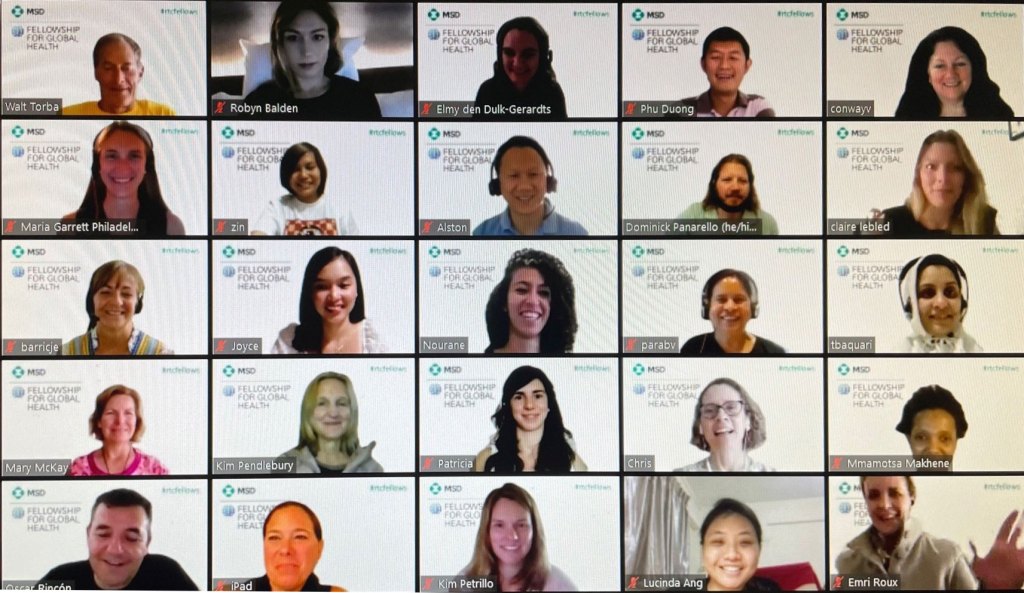
This year marks the 10-year anniversary of the program. From 2012 to 2022, 283 Fellows from 40 countries have worked with 44 NGO partners. The program has touched thousands of lives in underserved communities around the world by developing and executing creative and sustainable solutions to some of the world’s most pressing health problems.


Meet some of our alumni Fellows who stepped away from their day jobs to make a difference for people across the globe.

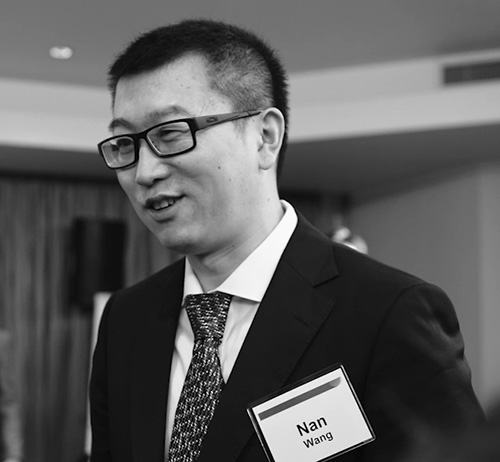
 60% more Africans die from cancer than from malaria, and this number of deaths is expected to increase almost 70% by 2030. To combat these alarming statistics, the Rwandan Ministry of Health is prioritizing timely access to cancer diagnosis and treatment for the people of Rwanda no matter where they live. In 2019, Wang and his colleagues, along with BIO Ventures for Global Health, focused on improving the country’s cancer patient referral system by establishing an inter-hospital communication system and supporting Rwanda’s Biomedical Center’s (RBC’s) implementation of the Rwanda Cancer Strategy.
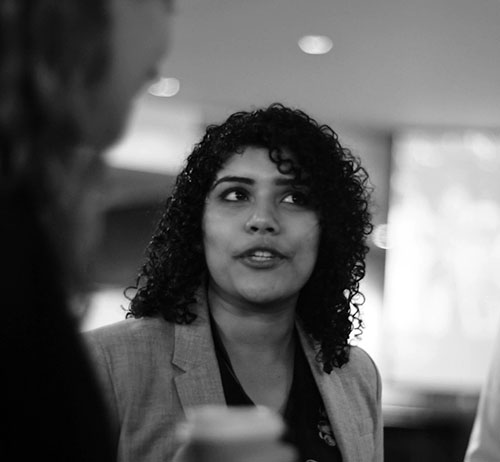
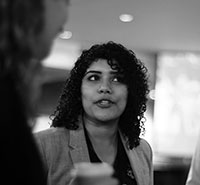 In Tanzania, many pharmaceutical manufacturers have closed in recent years making the country heavily reliant on imports and susceptible to sub-standard medicines. In 2019, to help address this issue, Jambunathan and her colleagues worked with Purdue University and the Medical Missionaries of Mary to develop a business and implementation plan for a local pharmaceutical manufacturing plant to make medicines for Africans by Africans.
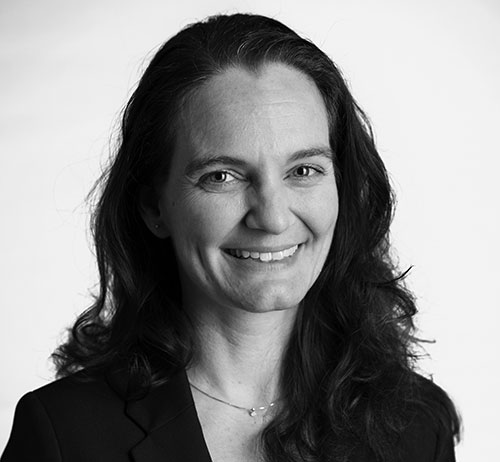
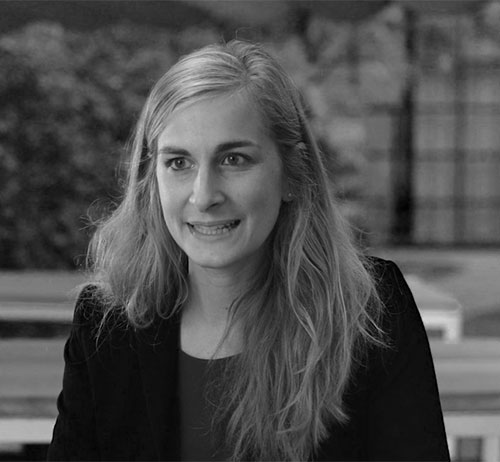
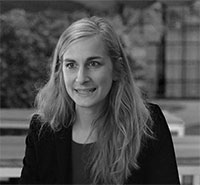 India is one of the countries with the highest number of human deaths due to rabies in the world, most of them due to bites from infected dogs. It is possible to eliminate canine rabies through mass vaccination, community education and surveillance programs. In 2019, along with Mission Rabies, Froehlich developed a sustainable and scalable strategy to add a dog rabies vaccination component to existing livestock vaccination campaigns, developed a strategy to ensure maximum participation by farmers in areas visited by the vaccination teams and helped raise overall awareness of the disease among rural communities.
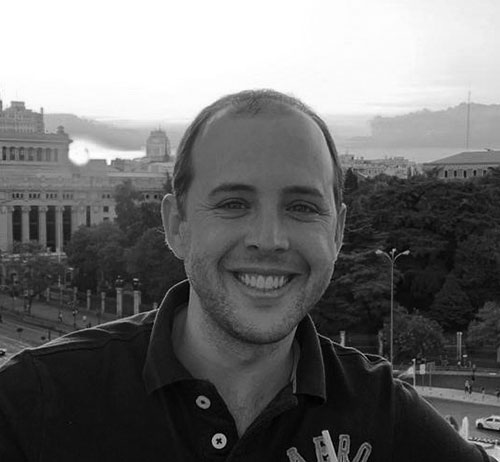
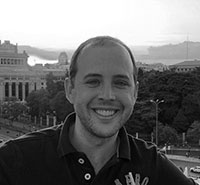 Studies show that nearly 40% of African children under the age of five are malnourished. Working with PanAfricare, Martinez Olivares and his teammate assessed the effectiveness of interventions implemented in Senegal to fight acute malnutrition in children under the age of five, babies who are breastfeeding and pregnant women. Martinez Olivares and his team supported PanAfricare in assessing their health service to identify areas of improvement and roadblocks that prevent children and women from having access to such interventions.
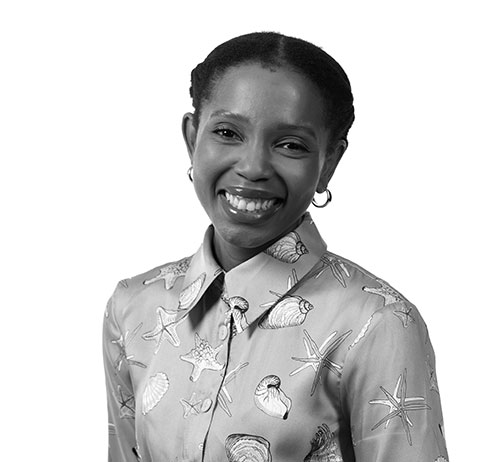
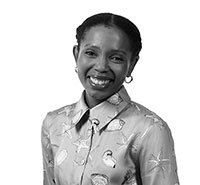 1 in 15 South Africans are affected by a rare disease. Makhene and her team — in partnership with Rare Diseases South Africa (RDSA) — worked to develop a comprehensive patient registry software system that will support each step of the patient experience from enrollment to monitoring of patterns. This will help provide effective data analysis functionality for identifying treatment patterns, promoting feasible-disease specific data interrogation and inform future research and advocacy programs.
  In Africa, many hospitals lack training and resources for effective communications between doctors and their cancer patients, causing many patients to simply vanish from the health system once a cancer diagnosis is revealed. To help address this issue, Domingo and her colleagues worked with BIO Ventures for Global Health to help improve doctor/cancer patient communications in order to increase patient adherence to treatment plans and decrease hospital readmission and mortality rates.
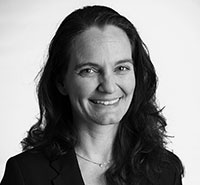 Research institutions in developing countries across Africa and Asia have limited access to laboratory equipment relying on donations primarily from the U.S. To help expand the supply chain to also include donations from Europe, den Dulk-Gerardts worked with Seeding Labs to develop a roadmap detailing the process for identifying donors and arranging for shipments to designated recipient facilities. With increased donations, an even greater number of institutions can benefit from the program, impacting researchers and STEM students in these countries as well as the communities they serve.
A spotlight on this year’s NGO partners
- The Carter Center
- CerviCusco
- Drugs for Neglected Diseases Initiative (DNDi)
- mothers2mothers
- One Health Trust, formerly Center for Disease Dynamics, Economics & Policies (CDDEP)
- PANIAMOR Foundation
- Project Hope
- Seeding Labs
- University of Dundee
- White Ribbon Alliance
- Worldwide Veterinary Service (WVS)